
A traffic impact study estimates the trips a project will generate and evaluates how they affect nearby roads and intersections. Agencies often request one with a rezoning, plan review, or new access to a busy road. Requirements depend on the jurisdiction, project size, and roadway, so confirm what applies early.
Many jurisdictions ask for one as part of a rezoning or plan submittal, particularly for larger or higher-traffic uses. Local requirements vary, and KDS can help identify what your project will need.
A parking study evaluates expected parking demand against supply, along with site circulation and layout, for commercial and residential projects.
Yes. When local code requires more or fewer spaces than a site needs or can accommodate, a parking study provides documented analysis to support a reduction or variance request.


Yes. KDS evaluates conflicts between existing utilities and proposed improvements, designs relocations, and coordinates with utility owners.
Relocations depend on utility owners’ approvals and schedules, which are outside a developer’s control. Identifying conflicts during feasibility lets you build the work into your schedule and budget.
Yes. KDS supports rezoning, zoning applications, variances, permitting, and agency coordination, along with the technical documentation reviewers expect.
A variance is relief from a specific zoning requirement, such as a setback, height, or parking standard, when a site’s conditions make strict compliance impractical. KDS supports variance applications with site analysis and technical documentation.
In Georgia, certain large projects are reviewed as Developments of Regional Impact, a process coordinated through the regional commission and the Georgia Department of Community Affairs. Whether a project triggers review depends on its type and size, so check early.
Site feasibility analysis evaluates zoning, access, traffic, parking, drainage, utilities, and other constraints to determine whether a property can support a proposed development.

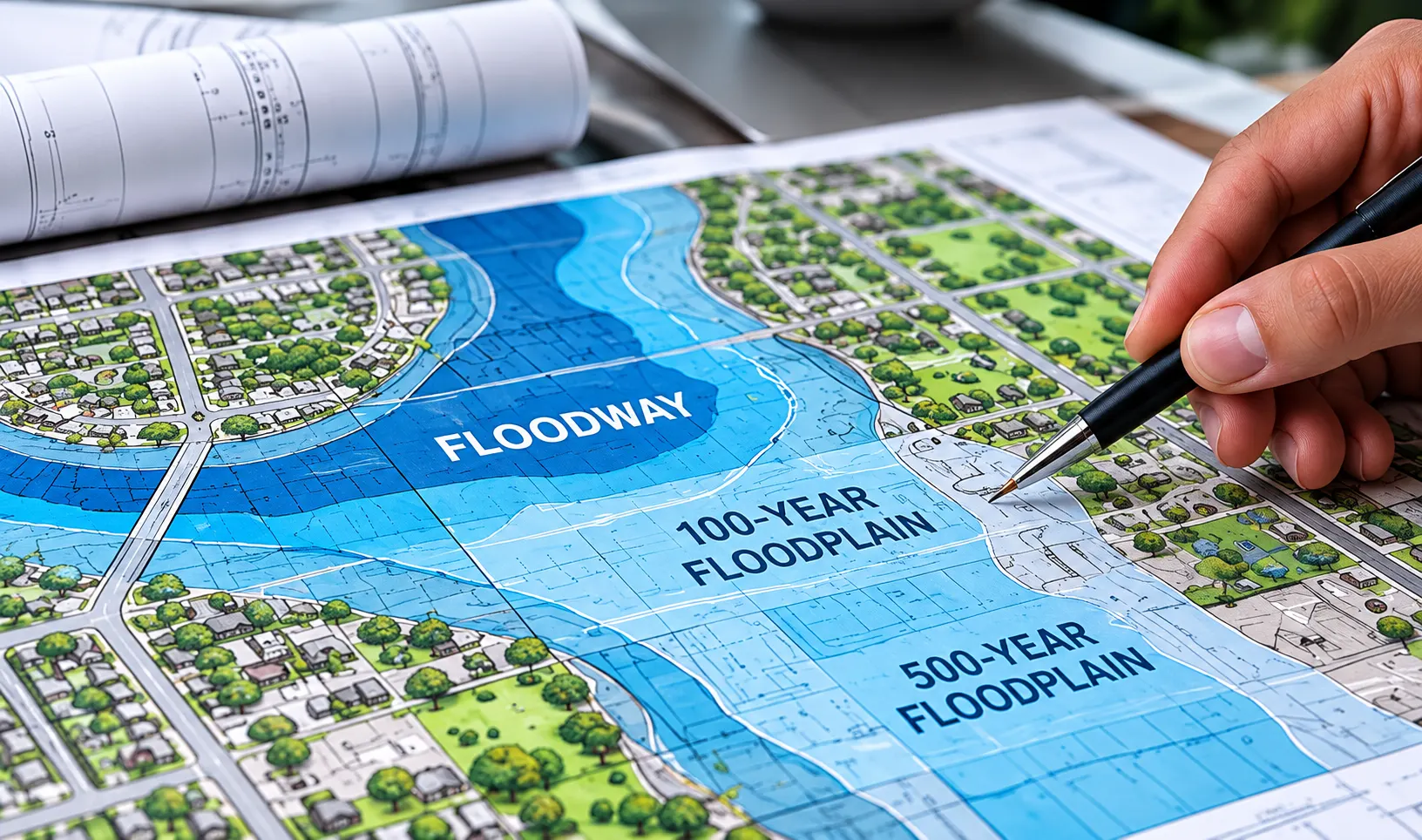
Yes. KDS provides flood zone analysis and supports floodplain and floodway revisions to help you understand site constraints and meet review requirements.
A Conditional Letter of Map Revision (CLOMR) is FEMA’s comment on a proposed project before it is built. A Letter of Map Revision (LOMR) officially revises the flood map after the work is complete. Which you need depends on the project and local floodplain rules.
KDS serves Metro Atlanta, including Fulton, DeKalb, Gwinnett, Cobb, Cherokee, Hall, Henry, and Forsyth counties. Cities include Atlanta, Decatur, Marietta, Buford, Dunwoody, Sandy Springs, Woodstock, Duluth, Snellville, Stonecrest, and Locust Grove.
KDS works with national private retail brands, industrial developers, and residential developers. See our About page for more.